


A Crowded Field: Dissecting the Global Capacity Management Market Share Dynamics
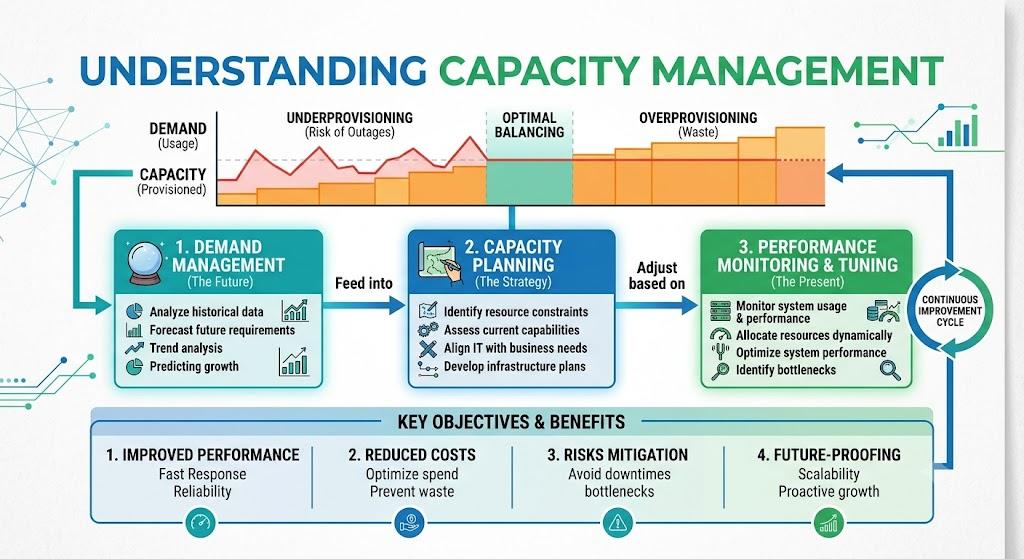
A Landscape of Giants, Specialists, and Disruptors
The competitive landscape for capacity management is a dynamic and complex arena where established IT behemoths, specialized pure-play vendors, and innovative cloud-native disruptors all vie for dominance. A detailed analysis of the Capacity Management Market Share reveals not a simple monopoly but a fragmented and multi-layered ecosystem. Market share is not just about revenue; it is about influence, the number of managed endpoints, and the ability to set the technological agenda. At the top, a handful of large, diversified IT management vendors command a significant portion of the market, leveraging their vast customer bases and extensive product portfolios. However, their leadership is constantly being challenged by agile, specialized companies that offer deep expertise in specific niches, such as cloud cost optimization or database performance. The rise of open-source tools and the native offerings of major cloud providers further complicates the competitive chessboard. Understanding the strategies, strengths, and weaknesses of these different player types is essential to navigating this crowded field and predicting the future direction of the market. The battle for market share is ultimately a battle for who can best help enterprises tame the complexity of modern IT.
The Dominance of Diversified IT Management Vendors
A substantial portion of the capacity management market share is held by large, well-established IT software companies such as Broadcom (through its CA and Symantec acquisitions), BMC Software, IBM, and Micro Focus. These vendors have been in the IT management game for decades and have built their dominant positions through a combination of organic development and aggressive acquisition strategies. Their primary advantage lies in their ability to offer a broad, integrated suite of IT operations management (ITOM) tools, of which capacity management is just one component. This "one-stop-shop" approach is highly appealing to large enterprises that prefer to consolidate their vendor relationships and seek a single, comprehensive platform to manage their entire IT estate. These giants leverage their massive installed base, deep relationships with Fortune 500 companies, and global sales and support networks to maintain their market leadership. They often target the traditional, on-premise data center market, where their feature-rich, enterprise-grade solutions are a good fit for managing complex, mission-critical systems. While sometimes perceived as less agile than their smaller competitors, their stability, scalability, and proven track record ensure they continue to command a significant slice of the market pie.
The Rise of Pure-Play Specialists and Disruptors
Challenging the dominance of the old guard is a vibrant ecosystem of pure-play specialists and nimble disruptors that are rapidly capturing market share, particularly in high-growth areas. These companies often focus on solving a specific, pressing problem with a best-of-breed solution. For example, vendors like Virtana, Densify, and Turbonomic (now part of IBM, but still operating with a specialist focus) have built their businesses by focusing intensely on infrastructure and cloud capacity optimization, often using sophisticated AI and machine learning algorithms. Their depth of expertise in this specific domain allows them to offer more advanced features and deliver a faster return on investment than the more generic modules of the larger suite vendors. Another category of disruptors is the new generation of observability and application performance monitoring (APM) companies, such as Datadog and Dynatrace. While their primary focus is on performance, their platforms inherently collect vast amounts of capacity-related data, and they are increasingly adding capacity planning and cost optimization features, encroaching on the traditional market from an application-centric perspective. These specialists win by being more focused, innovative, and often, better aligned with modern cloud-native and DevOps practices.
The Cloud Providers' Impact on the Vendor Landscape
The most significant disruptive force impacting the capacity management market share is, without a doubt, the major public cloud providers themselves: Amazon Web Services (AWS), Microsoft Azure, and Google Cloud Platform (GCP). Each of these hyperscalers offers its own suite of native tools designed to help customers manage the capacity and cost of the resources they consume on that specific cloud. Tools like AWS Compute Optimizer, Azure Advisor, and Google's Recommender use machine learning to analyze usage patterns and provide recommendations for right-sizing virtual machines, optimizing storage tiers, and purchasing reserved instances. Because these tools are built-in, readily available, and often free or low-cost, they represent a significant competitive threat to third-party vendors. For customers operating solely within a single cloud, these native tools may be "good enough," reducing the need for a more comprehensive commercial solution. However, this also creates a major opportunity for third-party vendors. The native tools are, by design, siloed within their own cloud. This creates a strong demand for independent, multi-cloud capacity management platforms that can provide a single, consolidated view across AWS, Azure, GCP, and on-premise environments, a capability the cloud providers themselves cannot and will not offer.
Explore More Like This in Our Reports:

 French
