


Fuel Cell Commercial Vehicle Market: Government Support and Hydrogen Infrastructure Shape Future Growth
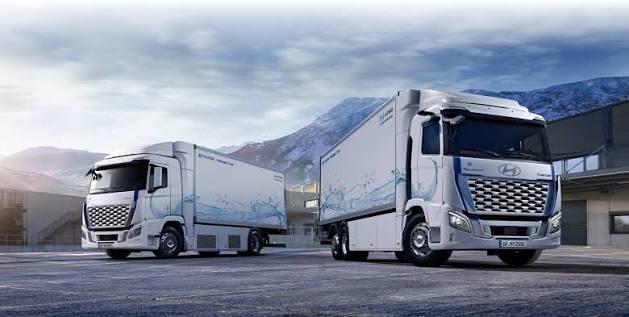
Fuel Cell Commercial Vehicle Market Gains Momentum as Hydrogen Technology Advances Zero-Emission Transportation
Market Estimation, Growth Drivers, and Opportunities
The global Fuel Cell Commercial Vehicle Market is attracting growing attention as transportation companies, vehicle manufacturers, and governments explore alternatives to diesel-powered fleets. According to Maximize Market Research, the report forecasts the global fuel-cell manufacturing capacity pipeline to reach USD 40 billion by 2027, representing a 34% CAGR over 2019–2027. This figure refers to the report’s stated manufacturing-capacity pipeline, not a confirmed valuation of commercial vehicles alone. The report was updated in March 2023 and focuses on forecasts through 2027, so these figures should be treated as historical projections rather than a current market valuation.
Fuel cell commercial vehicles use hydrogen to generate electricity for propulsion, producing water at the vehicle and no tailpipe carbon dioxide emissions during operation. They are attracting interest in heavy-duty transport, buses, coaches, logistics, construction, and mining, where operating range, payload, and refuelling time can be important considerations. Growth drivers include stricter emissions targets, fleet decarbonization strategies, investment in hydrogen production and refuelling infrastructure, and continued development of fuel-cell stacks and power systems.
Significant opportunities exist in heavy-duty trucks, public transport fleets, port operations, and vehicles working on predictable routes that can be served by dedicated hydrogen stations. Advances in fuel-cell durability, hydrogen storage, system efficiency, and manufacturing scale could improve operating economics. However, high vehicle costs, limited refuelling networks, hydrogen availability, and the cost of low-carbon hydrogen remain barriers to widespread adoption.
* Request Your Free Sample Copy: https://www.maximizemarketresearch.com/request-sample/81016/
United States Market Trends and Investment in 2025
In the United States, 2025 developments highlighted efforts to commercialize hydrogen-powered heavy-duty transport. At the Advanced Clean Transportation Expo in April 2025, Hyundai Motor unveiled an updated XCIENT Class 8 fuel-cell truck tailored to the North American market, featuring advanced driver-assistance systems and new hydrogen technologies. Hyundai also outlined a U.S. business model and partnerships intended to support commercialization, building on fleet operations in California and logistics activities connected to its Georgia manufacturing facility. These developments illustrate how vehicle makers are moving from demonstrations toward real-world fleet deployment. Federal research and development initiatives supporting hydrogen technology and heavy-duty vehicle demonstrations also contribute to the broader innovation environment. Nevertheless, long-term growth will depend on dependable hydrogen supplies, refuelling infrastructure, vehicle availability, and total operating costs that make commercial sense for fleet operators.
Market Segmentation: Key Categories
The report segments the market by product type, propulsion, technology, end-use industry, and region. It does not clearly establish a single largest-share segment across all these categories in the available overview, so unsupported market-share rankings are avoided.
The product categories include light trucks, buses and coaches, utility vehicles, and other commercial vehicles. By propulsion, the market covers pure fuel-cell vehicles and hybrid vehicles. Proton exchange membrane fuel cells (PEMFCs), phosphoric acid fuel cells, and other technologies form the technology segments. End-use industries include construction, mining, transportation, and other applications.
Asia-Pacific is identified as the largest regional market in the report’s 2020–2027 forecast period. Buses and coaches are highlighted for their growth potential as public transport operators pursue lower-emission fleets, while transportation is identified as a fast-growing end-use industry. Government support, urbanization, and the need to reduce transport emissions contribute to these opportunities.
Key players operating in Global Fuel Cell Commercial Vehicle Market
• AB Volvo
• Ashok Leyland Ltd.
• CNH Industrial NV
• Daimler AG
• Hyundai Motor Co.
• Nikola Corp.
• PACCAR Inc.
• Tata Motors Ltd.
• Toyota Motor Corporation
• Volkswagen AG
• Ballard Power Systems
• ITM Power
• Plug Power
• Delphi Technologies
• Doosan Corporation
• Hydrogenics
• Proton Power System PLC
Competitive Analysis: Leading Companies and Innovation
The report lists established vehicle manufacturers and fuel-cell technology suppliers, including AB Volvo, Daimler AG, Hyundai Motor Company, Toyota Motor Corporation, and Ballard Power Systems. The available overview does not verify these as the five largest companies by market share; they are discussed here as notable participants from the report’s company list.
- Hyundai Motor Company: Hyundai continues to develop hydrogen-powered commercial vehicles. Its updated XCIENT fuel-cell truck, introduced in 2025, incorporates advanced driver-assistance systems and hydrogen technology designed for North American operations.
- Daimler Truck: In 2025, Daimler Truck advanced real-world testing of its Mercedes-Benz GenH2 fuel-cell trucks. Five vehicles completed more than 225,000 kilometres during initial customer trials, providing operational data for further development. The company also reported plans for a small series of 100 next-generation trucks for customer deployment from late 2026.
- Toyota Motor Corporation: Toyota’s fuel-cell expertise and work on hydrogen applications offer opportunities for commercial mobility. Development of reliable fuel-cell systems and hydrogen supply solutions can support wider use in transport.
- AB Volvo: Volvo’s commercial-vehicle engineering and investment in lower-emission transport technologies position it to participate in the transition toward cleaner heavy-duty fleets.
- Ballard Power Systems: Ballard develops fuel-cell technology for commercial transport and buses. Improvements in fuel-cell durability, efficiency, and system integration can help support fleet operators seeking dependable zero-tailpipe-emission vehicles.
Across the industry, key innovation priorities include more efficient fuel-cell stacks, improved hydrogen storage, durable system components, and integrated powertrains. Progress in these areas could lower operating costs and make hydrogen vehicles more practical for long-distance and high-utilization commercial applications.
Regional Analysis: United States, United Kingdom, Germany, France, Japan, and China
United States: Demand is supported by clean-transportation initiatives, hydrogen research, and interest in decarbonizing freight and public transport. California fleet demonstrations and investment in hydrogen infrastructure are helping companies evaluate commercial deployment.
United Kingdom: The UK’s decarbonization objectives and support for hydrogen development create opportunities in public transport, logistics, and industrial mobility. Growth will depend on infrastructure availability and the commercial competitiveness of hydrogen-powered vehicles.
Germany: Germany is an important development centre for hydrogen trucks. In 2025, Daimler Truck reported government-approved funding of €226 million for developing, producing, and deploying 100 fuel-cell trucks. The programme supports vehicle development and preparations for future series production.
France: Climate policies, public transport modernization, and wider European efforts to reduce road-transport emissions offer potential opportunities. Adoption will depend on fleet economics, hydrogen supply, and refuelling-network expansion.
Japan: Japan’s established fuel-cell industry and hydrogen strategy support the development of fuel-cell mobility. Collaboration between vehicle manufacturers, technology providers, and energy companies can help strengthen commercial applications.
China: Government support for hydrogen development, commercial-vehicle manufacturing capacity, and efforts to reduce urban pollution create opportunities for fuel-cell buses and trucks. Local supply chains and fleet deployment can contribute to market development, although country-level market-share figures are not specified in the report overview.
Related Reports:
Global Automotive Telematics Device Market https://www.maximizemarketresearch.com/market-report/global-automotive-telematics-device-market/81398/
Global Advanced Driver Assistance System (ADAS) Market https://www.maximizemarketresearch.com/market-report/global-advanced-driver-assistance-system-adas-market/12918/
Global Automotive Windows and Exterior Sealing Market https://www.maximizemarketresearch.com/market-report/global-automotive-windows-and-exterior-sealing-market/42421/
Conclusion: Infrastructure and Cost Reduction Will Shape Future Growth
The fuel cell commercial vehicle market has significant long-term potential, particularly in heavy-duty transport, buses, logistics, and industrial applications where range and refuelling time matter. However, successful commercialization will require more than vehicle innovation. Affordable low-carbon hydrogen, reliable refuelling networks, improved fuel-cell durability, and competitive lifecycle costs will determine the pace of adoption. Manufacturers that combine efficient powertrain technology with fleet partnerships and practical infrastructure solutions are likely to be better positioned to capture future opportunities.
About Maximize Market Research
Maximize Market Research Pvt. Ltd. (MMR) is a global market research and consulting firm known for delivering accurate, actionable, and data-driven insights. Our expertise spans diverse industries — including medical devices, pharmaceuticals, technology, automotive, electronics, chemicals, personal care, and consumer goods. We provide services such as market-validated forecasts, competitive intelligence, strategic consulting, and industry impact analysis, helping businesses navigate market complexities and achieve sustainable growth.
Contact Maximize Market Research
MAXIMIZE MARKET RESEARCH PVT. LTD.
2nd Floor, Naval IT Park Phase 3,
Pune-Bangalore Highway, Narhe,
Pune, Maharashtra 411041, India.
📞 +91 9607365656
📧 sales@maximizemarketresearch.com

 English
