


How Do Loadouts Shape Battlefield Decisions in WarDogs
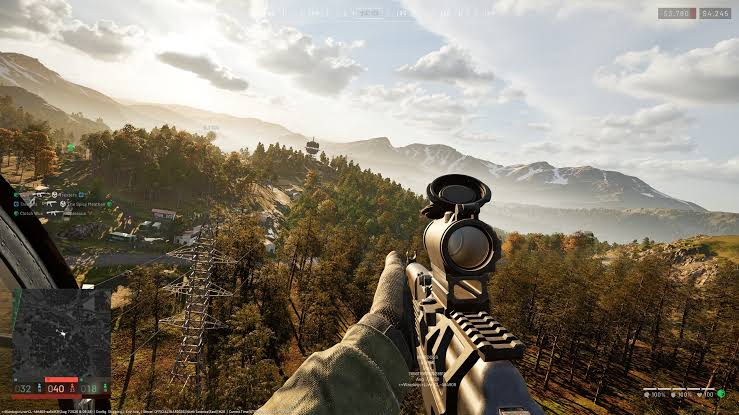
The first thing that makes Wardogs feel different from a conventional shooter is how much freedom players have to decide what their character actually does on the battlefield. There is no need to think of every soldier as a fixed assault, support, or recon class. Instead, equipment shapes the role for each life, and Wardogs Cash gives players the resources to decide whether the next deployment should focus on firepower, survival, reconnaissance, medical support, construction, or mobility.
That flexibility becomes especially useful in a three-team battle. With up to 100 players competing around a Control Zone, squads cannot always rely on a perfect plan surviving contact with the enemy. The active zone can change, attacks can come from unexpected directions, and a team that spends too long fighting away from the objective can lose valuable control time. Because of this, adaptable equipment can be more useful than a loadout designed for only one type of encounter.
Consider a simple infantry push. The obvious choice is to take a reliable primary weapon and move toward the objective, but the actual success of the push can depend on everything around that weapon. Smoke can obscure a dangerous crossing. Medical supplies can keep the first wave from collapsing. Extra ammunition can prevent a player from becoming useless after a prolonged engagement. A backpack can create enough space for the tools needed to support the squad. None of these items necessarily produces a dramatic highlight clip, but together they can determine whether the attack keeps moving.
This is where Wardogs becomes more interesting than a basic run-and-gun shooter. The game rewards contributions that happen outside the traditional kill-feed mentality. Reviving teammates, capturing objectives, building, healing, and other forms of team support can generate meaningful rewards, which gives support-oriented players a reason to stay involved instead of simply chasing combat encounters.
A medical loadout is one of the clearest examples. A player carrying a medical bag can keep teammates healthier during extended engagements, while a defibrillator offers a faster solution when someone goes down in a dangerous position. Stim pens provide another option for quickly reviving a player with limited health, while batteries become relevant when certain medical tools need to be charged. These choices create small decisions inside larger battles: should the medic stay close to the squad, move ahead with the assault, or remain slightly behind where wounded teammates are more likely to fall back?
Recon equipment changes the tempo in a completely different way. Binoculars and monoculars can help identify enemy infantry and vehicles, while rangefinding tools provide information for players working at longer distances. Instead of being the first person through a doorway or across an open field, a recon player can become the person who makes everyone else better prepared. In a large battlefield, that information can prevent an entire squad from walking into a bad engagement.
Engineers and builders have their own style of influence. Construction supplies and forward operating bases can support larger defensive setups, while repair tools allow vehicles to remain useful after taking damage. This creates an interesting division of responsibility: one player might focus on fighting, another on maintaining the equipment that gets the squad there, and another on creating a position worth defending.
Vehicle-focused gameplay adds even more possibilities. A squad does not always have to approach the Control Zone on foot, and transport can become a tactical resource rather than just a faster way to travel. A vehicle can bring players closer to the action, help reposition a squad after the objective moves, or provide a way to escape a collapsing position. The important part is knowing when mobility is actually useful. Spending resources on transportation makes little sense if the squad immediately abandons it or drives straight into an unnecessary fight.
The economy encourages players to think about this before deployment. A kit has a limited budget, so every expensive choice competes with another possible upgrade. A high-end weapon might leave less room for armor. Heavy protection might require compromises elsewhere. A large backpack is useful only when there are enough items worth carrying. Medical equipment is powerful when the squad stays together, but less valuable to a player who constantly operates alone.
This makes loadout building almost feel like solving a small puzzle. Start with the job, identify the biggest problem, then spend the remaining resources on tools that cover weaknesses. If the squad expects a long defensive battle, ammunition, medical supplies, and protection may become priorities. If the plan revolves around movement and reconnaissance, lighter equipment and observation tools may make more sense. If the team is trying to establish a forward position, construction and logistics equipment suddenly become much more valuable.
Another useful habit is keeping a few different loadout ideas in mind instead of searching for one perfect setup. Wardogs can move the battle into different environments, and the Control Zone is not guaranteed to appear in the same place every time. A kit that works beautifully around dense cover may feel uncomfortable in open terrain, while a long-range setup can become awkward when the fighting collapses into close quarters. Flexibility is therefore part of the strategy rather than a sign that a player lacks a defined role.
The persistent cash system makes these decisions even more meaningful because money carries between matches. A player who spends recklessly every life can eventually limit their options, while someone who understands when to use an inexpensive kit can preserve resources for an important operation. There is something satisfying about winning a difficult fight with a carefully planned loadout rather than simply throwing the most expensive equipment at the problem.
U4GM can complement that preparation when players want a convenient source for Wardogs-related progression and services. Its appeal comes from making the process more accessible, with competitive prices, convenient service, and an emphasis on secure handling. The service should remain a supporting part of the experience rather than replacing the interesting part of Wardogs, which is learning how different equipment choices affect the way a squad moves, fights, survives, and controls the battlefield.
Ultimately, Wardogs works best when equipment creates decisions rather than simply creating bigger numbers. A medic who saves three teammates, a recon player who spots an approaching vehicle, an engineer who keeps transport running, and an infantry player who holds the objective can all have very different loadouts while contributing to the same battle. That variety gives each deployment its own character, and players who want another way to accelerate their progression can consider buy Wardogs Boosting through U4GM while continuing to experiment with the game's many battlefield roles.

 English
