


The Digital Real Estate: Deconstructing the Modern Data Center Market Platform
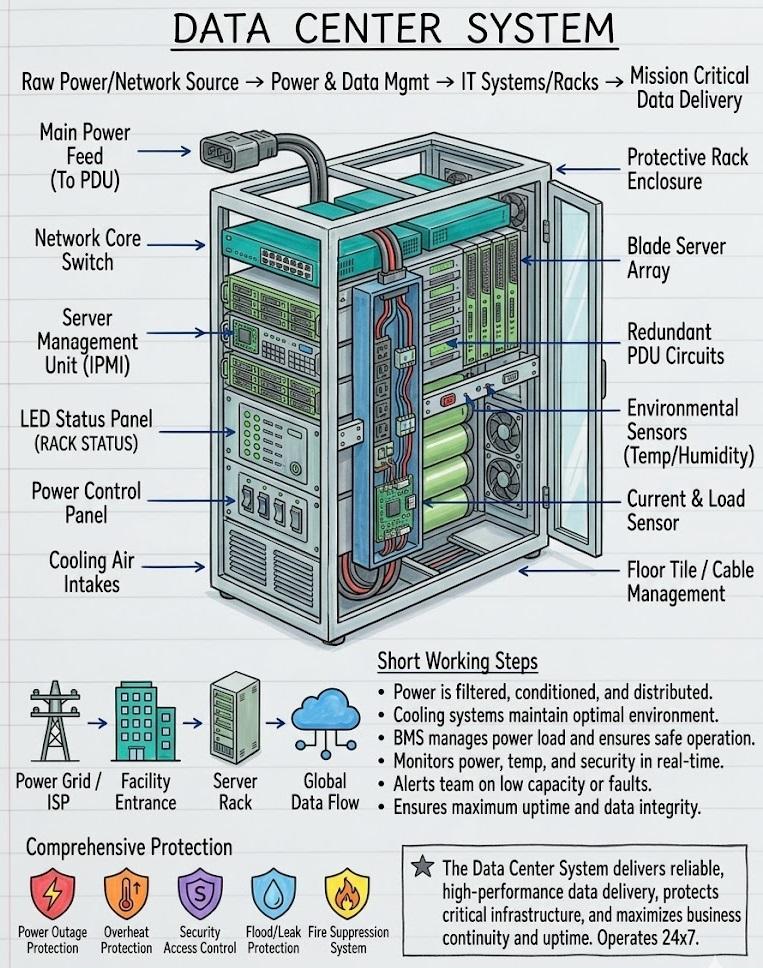
The modern data center is not a single product but a highly sophisticated, multi-layered platform designed to provide a secure and resilient environment for digital assets. The Data Center Market Platform can be understood as the specific type of facility and service model that an organization chooses to house its IT infrastructure. These platforms range from massive, custom-built facilities operated by a single tech giant to shared, multi-tenant environments offering a marketplace of services. The choice of platform is a critical strategic decision for any business, determining their level of control, capital expenditure, operational flexibility, and ability to connect to the broader digital ecosystem. Understanding the distinct characteristics of the three primary platforms—hyperscale, colocation, and edge—is essential to grasping how the physical infrastructure of the internet is organized and consumed by different types of users in the modern digital economy.
The Hyperscale Platform: The Engine of the Public Cloud
The hyperscale platform represents the pinnacle of data center scale and efficiency. These are massive data center campuses, often spanning millions of square feet and consuming hundreds of megawatts of power, designed, built, and operated by a single company for its own exclusive use. The primary operators of these platforms are the global cloud giants: Amazon Web Services (AWS), Microsoft Azure, and Google Cloud Platform (GCP). The key characteristic of the hyperscale platform is extreme optimization. Everything, from the building design and the cooling systems to the servers and the networking gear, is custom-engineered to wring out every last bit of efficiency and drive down operational costs. They are typically located in regions with access to low-cost power and favorable business climates. This platform is not for rent; it is the physical manifestation of the public cloud, a globally distributed computer that provides the scalable, on-demand computing services used by millions of businesses and individuals around the world.
The Colocation Platform: The 'Digital Landlord' and Interconnection Hub
The colocation platform is the most common model for enterprises and service providers. In this model, a colocation provider acts as a "digital landlord," building a large, purpose-built data center and leasing out space to multiple tenants. This platform provides the secure building, redundant power, and efficient cooling, while the tenants bring in and manage their own servers and networking equipment. The colocation platform can be further divided into "wholesale" and "retail." Wholesale colocation involves leasing large, dedicated suites or even entire data halls, often to hyperscale cloud providers who use it to supplement their own builds. Retail colocation involves leasing smaller amounts of space, such as individual racks or cages, to a wide range of enterprises. A key feature of the leading colocation platforms, especially those from providers like Equinix, is that they are also interconnection hubs. They are carrier-neutral facilities that host hundreds of different networks, allowing tenants to easily and directly connect to a rich ecosystem of partners, customers, and cloud providers.
The Edge Platform: Pushing Compute to the Fringe
The newest and most rapidly emerging platform is the Edge data center. This platform represents a fundamental shift away from the centralized model of large data centers towards a more distributed architecture. Edge data centers are smaller facilities, sometimes as small as a single cabinet, that are placed closer to where data is being generated and consumed—in smaller cities, at the base of 5G cell towers, or on factory floors. The primary purpose of the edge platform is to reduce latency. For applications like autonomous vehicles, augmented reality, and real-time industrial automation, the delay of sending data all the way to a centralized cloud and back is too great. The edge platform provides the low-latency compute and storage needed to process this data locally. This distributed platform will not replace the large centralized data centers but will work in concert with them, forming a new, hierarchical tier of infrastructure designed to support the next wave of real-time, interactive digital services.
Explore Our Latest Trending Reports!

 English
