


Women's Business Casual Dresses: The Complete Guide to Dressing Sharp Without Trying Too Hard
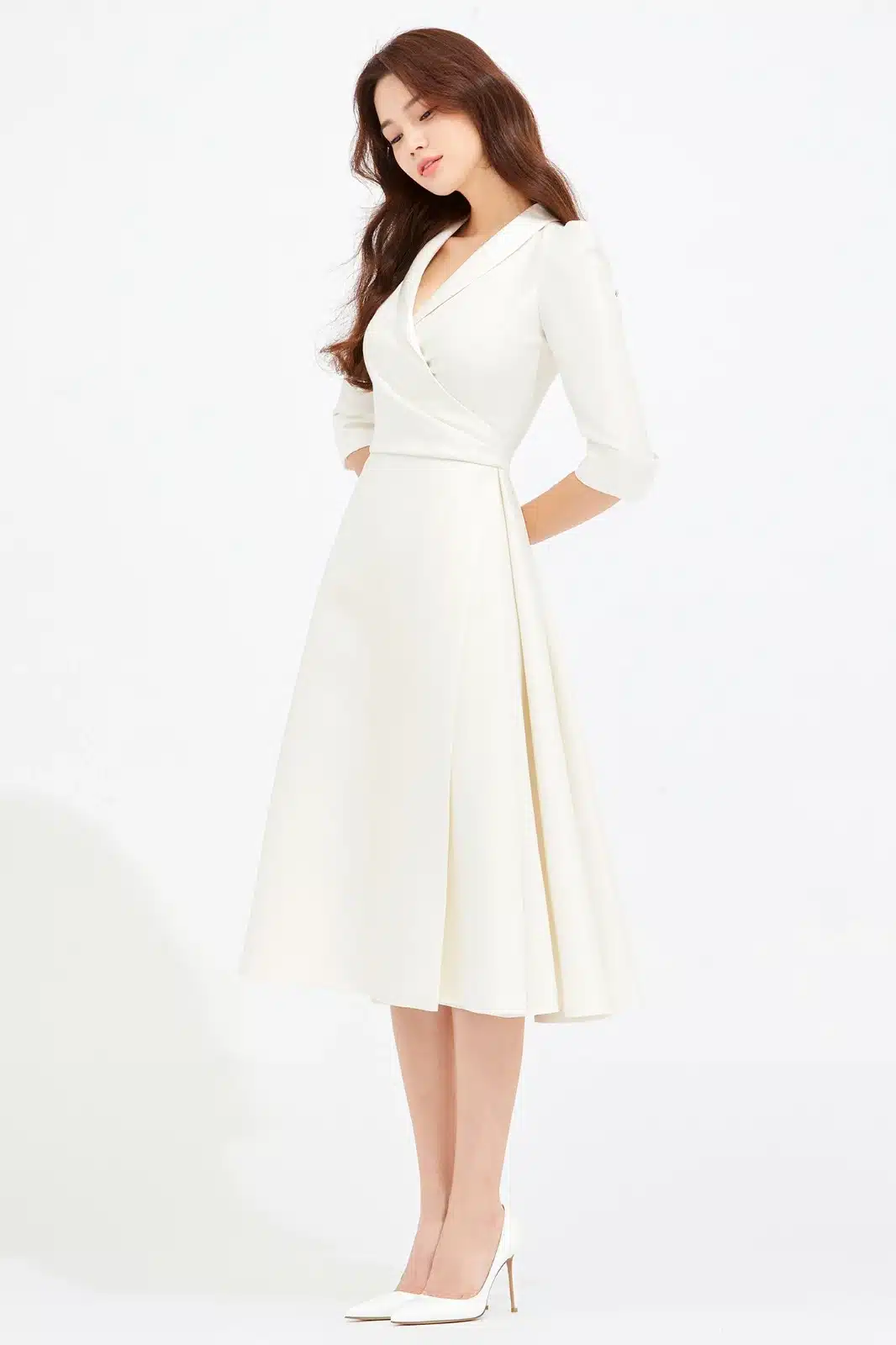
Walk into any modern office and you'll notice something: the stiff, boxy suits of the '90s are mostly gone. In their place? Women who look polished, comfortable, and unmistakably in charge, often in a single, well-chosen dress.
That shift isn't an accident. It's the rise of business casual dressing, and for women, the dress has quietly become the MVP of the wardrobe. One piece, zero guesswork, endless versatility.
But "business casual" is also one of the most misunderstood dress codes out there. Too casual and you look like you wandered in from brunch. Too formal and you look like you're headed to a board meeting that doesn't exist. Finding that sweet spot is harder than it sounds, which is exactly what this guide is here to fix.
What Does "Business Casual" Actually Mean for Dresses?
Business casual sits in the middle of a spectrum. On one end, you've got formal business wear, think structured suits, blazers, closed-toe pumps. On the other end, casual wear, jeans, sneakers, anything you'd wear to run errands.
A business casual dress lives in the overlap. It's polished enough to command respect in a client meeting, but relaxed enough that you're not adjusting a stiff collar all day.
I've noticed that the confusion usually comes from one thing: people think "casual" means "relaxed rules." It doesn't. It means relaxed formality, not relaxed effort. The fabric, fit, and finish still need to say "I know what I'm doing."
How Is Business Casual Different From Business Formal?
Business formal usually demands tailored suits, structured blazers, and conservative colors navy, black, charcoal, with almost no room for personality.
Business casual dresses, on the other hand, allow for color, print, and a bit of personal style, as long as the silhouette stays clean and the fabric doesn't look like it belongs at the beach.
A good rule of thumb: if you'd feel comfortable meeting a new client, presenting to leadership, or grabbing lunch with your boss in the outfit, it's probably business casual.
Why Do Dresses Work So Well for This Dress Code?
A dress solves the eternal "does this top match this bottom" problem in one move. It's a single decision instead of two, which, on a Monday morning, matters more than people admit.
There's also a styling logic here that stylists talk about constantly: monochrome or single-piece outfits tend to read as more put-together than mixed separates, simply because there's one fewer seam where things can go visually wrong.
Key Features of a True Business Casual Dress
Not every dress in your closet qualifies, even if it looks "office-appropriate" at first glance. A few features consistently separate the ones that work from the ones that don't.
Fabric and Structure Matter More Than Color
Look for fabrics with a bit of structure, ponte knit, crepe, a good cotton-blend, or wool crepe. These hold their shape through a full day of sitting, standing, and moving between meetings.
Avoid anything that wrinkles the second you sit down or clings in ways that shift as you move. Linen, for example, looks lovely for the first twenty minutes and then tells everyone exactly how your morning went.
Hemline and Silhouette Guidelines
Knee-length or just below the knee is the safest, most universally accepted length for business casual settings. It works whether you're in a conservative finance office or a more relaxed creative agency.
Silhouette-wise, sheath dresses, wrap dresses, and shirt dresses are the three workhorses. Each does something slightly different:
Sheath Dresses vs. Wrap Dresses vs. Shirt Dresses
-
Sheath dresses — fitted, structured, minimal movement. Best for client-facing days or presentations.
-
Wrap dresses — flattering on nearly every body type, comfortable for long days, slightly softer look.
-
Shirt dresses — the most casual of the three, great for Fridays or hybrid office-to-errands days.
What Necklines and Sleeve Lengths Are Appropriate?
A modest scoop, V-neck, or crew neckline keeps things professional without looking prim. Sleeveless is generally fine in most offices, though it's smart to keep a blazer or cardigan nearby for coverage during formal meetings.
Elbow-length or three-quarter sleeves are the most versatile choice year-round, they photograph well on video calls and layer easily under jackets.
How to Style a Business Casual Dress for Different Occasions
The same dress can go from "regular Tuesday" to "client pitch" with a few smart swaps. This is where a lot of women actually save money, one dress, five different looks.
Styling for a Client Meeting or Presentation
Add a tailored blazer, close-toed heels, and minimal jewelry. Keep accessories quiet here; the goal is for people to remember what you said, not what you wore.
I always tell clients: your outfit should support your credibility, not compete with it.
Styling for a Casual Friday or Hybrid Office Day
Swap the blazer for a structured cardigan or denim jacket, add loafers or clean sneakers, and let a statement necklace or bold earrings do the talking.
Styling for After-Work Events
A simple switch, heels instead of flats, a bolder lip, maybe a clutch instead of a laptop bag, takes the same dress from "9 to 5" to "dinner with friends" in under five minutes.
Best Colors and Patterns for Business Casual Dresses
Color psychology actually plays a real role in professional settings, and it's not just marketing fluff. Studies on workplace perception have repeatedly found that neutral and cool tones (navy, gray, deep green) are associated with competence and reliability, while brighter tones read as more approachable.
Which Colors Read as "Professional" vs. "Too Casual"?
Navy, charcoal, black, burgundy, and deep jewel tones almost always read as professional. Pastels and soft neutrals, blush, sage, camel, sit comfortably in the business casual zone too.
Neon brights, tropical prints, and anything overly sheer tend to tip into "too casual" or "not office-appropriate," regardless of how well-fitted the dress is.
Are Prints and Patterns Office-Appropriate?
Small-scale prints, subtle florals, thin stripes, houndstooth, are generally safe. Large, loud patterns can be distracting in a professional setting and are better saved for weekends.
A good test: if the print is the first thing someone notices about you across a conference room, it's probably too bold for daily office wear.
Choosing the Right Fit: Off-the-Rack vs. Custom-Made Dresses
Here's something most style guides won't tell you: even a $300 designer dress looks mediocre if it doesn't fit your actual body.
Off-the-rack sizing is built around averages, and almost nobody is exactly average in every measurement. That's why so many women end up altering store-bought dresses, sometimes spending nearly as much on tailoring as they did on the dress itself.
This is where custom-made dresses genuinely change the equation. When a dress is built to your exact measurements from the start, the shoulder seams sit right, the waist hits where it should, and the hemline is precise instead of "close enough." At our studio, this is the difference we hear about most from clients, the dress simply moves with them instead of against them.
Custom vs. Off-the-Rack: A Quick Comparison
FactorOff-the-RackCustom-MadeFit accuracyBased on standard sizingBuilt to your exact measurementsFabric choiceLimited to what's in stockFull control over fabric and finishAlteration costOften needed, adds upNot needed, fit is right from day oneUniquenessMass-producedOne of a kindLongevityVaries with fabric qualityTypically higher, made to last
If you've ever bought a dress and immediately thought about which tailor to take it to, that's usually a sign custom-made is worth exploring.
Building a Capsule Wardrobe of Business Casual Dresses
You don't need twenty dresses. You need five or six that actually work together and cover every scenario your job throws at you.
How Many Dresses Do You Actually Need?
A practical starting point: two neutral sheath dresses, one wrap dress, one shirt dress, and one dress in a color or print that reflects your personal style. That combination covers roughly 90% of office situations.
What Order Should You Buy Them In?
Start with the neutrals. A navy or charcoal sheath dress will earn its keep faster than any trendy print, simply because it works with everything you already own — blazers, cardigans, flats, heels.
Once the neutrals are covered, add personality pieces. This is also where custom pieces make the most sense, since you're investing in something you'll wear repeatedly for years, not a one-season trend.
Frequently Asked Questions
Is a bodycon dress considered business casual? Generally, no. Bodycon dresses are too fitted and revealing for most professional settings. A relaxed sheath or wrap dress gives a similar polished silhouette without crossing the line.
Can I wear sleeveless dresses to the office? Yes, in most modern offices sleeveless dresses are acceptable, especially with a blazer or cardigan kept nearby for meetings or cooler rooms.
What shoes go best with business casual dresses? Closed-toe flats, low block heels, and loafers are the safest choices. Save strappy sandals and sky-high heels for after-work events.
How long should a business casual dress be? Knee-length or just below the knee is the most universally accepted length across industries and office cultures.
Are maxi dresses appropriate for business casual settings? Some maxi dresses work if they're fitted at the waist and made from structured fabric, but flowy, bohemian-style maxis usually read as too casual for office environments.
Is it worth getting a business casual dress custom-made? If you struggle to find dresses that fit well off the rack, or you want a piece built to last several years, custom-made is often more cost-effective long-term than repeated alterations.
Can prints be part of a professional dress code? Yes, as long as they're small-scale and not overly bright. Subtle florals, pinstripes, and houndstooth patterns are all considered office-appropriate.
The Bottom Line
Business casual dressing isn't about following rigid rules, it's about understanding the balance between polish and comfort, then building a wardrobe that reflects that balance without daily stress.
Start with a few well-fitted neutral dresses, learn how to restyle them for different occasions, and consider custom-made pieces for the styles you wear most often. Once you've got that foundation, getting dressed for work stops being a decision and starts being a formality.

 French
